Best cat food for cats with skin allergies affect 10–20% of cats, often triggered by food sensitivities to common proteins like chicken (the top culprit at around 60%), beef, dairy, fish, wheat, or corn. These sensitivities lead to frustrating symptoms such as intense itching (especially around the head and neck), red or inflamed skin, scabs, hair loss, chronic ear infections, and excessive over-grooming.
The best cat food for skin allergies focuses on hydrolyzed proteins (broken down so small the immune system doesn’t recognize them) or novel proteins (uncommon sources like rabbit, venison, duck, or kangaroo that your cat hasn’t encountered before).
Key features include limited ingredients, balanced omega-3 and omega-6 fatty acids for skin health, and avoidance of common allergens. Prices typically range from $1.50–$4.50 per lb for dry food and $0.35–$1.20 per oz for wet.
ALSO READ: Top 5 Best Dry Cat Foods for Weight Loss
Important note: Prescription diets (like Hill’s z/d or Royal Canin Selected Protein) require a vet diagnosis, usually via a strict 8–12 week elimination trial. Over-the-counter (OTC) options work well for milder cases or as trials under vet guidance.
Here are our top picks for the best cat food for skin allergies, based on vet recommendations, clinical backing, and real owner feedback from sources like PetMD, Chewy, Catster, The Spruce Pets, and veterinary sites.
ALSO READ: Best Cat Food Brands for Kittens
Top 5 Best Cat Food for Cats With Skin Allergies
Hill’s Prescription Diet z/d – Best Overall (Hydrolyzed)

Available in wet and dry forms, this uses hydrolyzed chicken liver broken down to tiny particles (<1,200 daltons) that are unlikely to trigger reactions, plus added omega-3s for skin support.
- Pros: Clinically proven high success rate (often 90%+ for managing symptoms), a favorite among vet dermatologists, and excellent for reducing itching and skin irritation.
- Cons: Requires a prescription and is pricey.
- Best For: Severe or confirmed food allergies.
Royal Canin Veterinary Diet Selected Protein (e.g., PR Rabbit/Pea or PV Venison/Pea) – Best Premium Novel Protein

Features single novel proteins like rabbit or venison with pea as the carb source for very low cross-reactivity.
- Pros: Extremely effective for cats allergic to common proteins like chicken or beef; supports skin and digestion.
- Cons: Prescription required and expensive.
- Best For: Cats that have failed multiple common-protein diets.
Purina Pro Plan Sensitive Skin & Stomach (Lamb & Rice) – Best OTC Budget
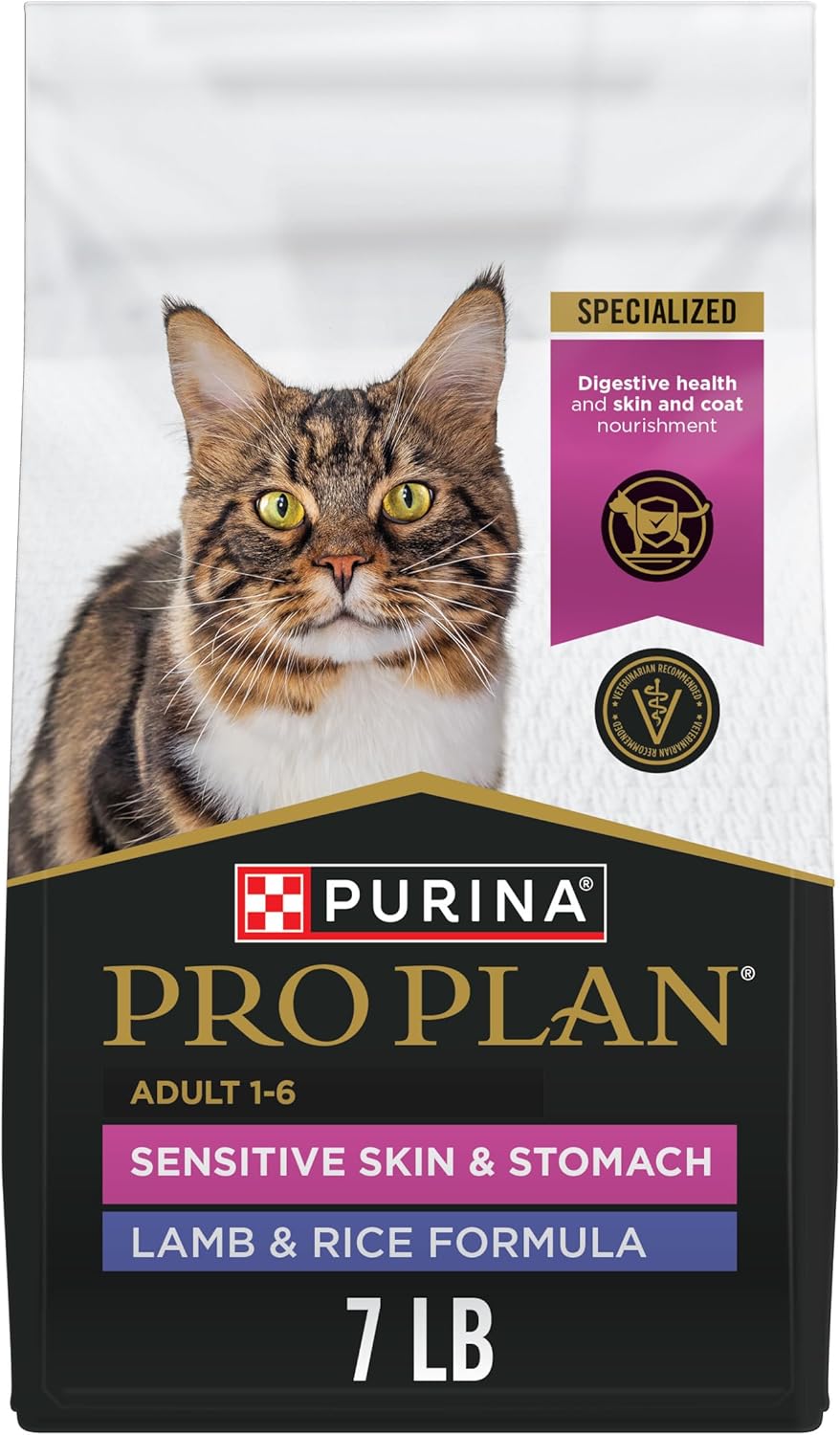
Lamb as the primary protein (novel for many cats), no chicken/beef/dairy, with added omega-6 for skin health.
- Pros: Affordable, no prescription needed, widely available, and effective for many mild cases.
- Cons: Includes grains and isn’t a strict limited-ingredient formula.
- Best For: Mild skin issues or budget-conscious owners.
Blue Buffalo Basics Limited Ingredient Diet (Duck & Potato) – Best Limited Ingredient Natural

Single protein source like duck, with grain-free options available and good omega balance.
- Pros: OTC, natural ingredients, and many owners report reduced itching and hair regrowth.
- Cons: Some cats may still react to duck.
- Best For: Mild allergies preferring natural, limited-ingredient OTC options.
Instinct Limited Ingredient Diet Rabbit – Best Novel Protein OTC

Single rabbit protein, grain-free, with options like freeze-dried raw coated for appeal.
- Pros: Rabbit is one of the least reactive novel proteins; great for cats that outgrow other OTC formulas.
- Cons: Stronger smell and higher cost.
- Best For: Cats needing a true novel protein without a prescription.
Quick Comparison of Best Cat Foods for Skin Allergies
| Rank | Brand | Type | Price Level | Protein Source | Requires Rx? | Best For |
| 1 | Hill’s z/d | Hydrolyzed | $$$$ | Hydrolyzed chicken | Yes | Severe allergies |
| 2 | Royal Canin Selected Protein | Novel | $$$$ | Rabbit/Venison | Yes | Confirmed protein allergies |
| 3 | Purina Pro Plan Sensitive | Lamb-based | $$ | Lamb | No | Mild cases / budget |
| 4 | Blue Buffalo Basics LID | Limited ingredient | $$$ | Duck | No | Natural OTC |
| 5 | Instinct LID | Novel | $$$$ | Rabbit | No | Failed other OTC proteins |
Criteria for Selecting Allergy-Friendly Cat Foods
We prioritized:
- Protein type — Hydrolyzed or novel (e.g., rabbit, venison, duck).
- Limited ingredients — Fewer than 10 total to minimize risks.
- Omega fatty acids — Added EPA/DHA for reducing skin inflammation.
- Evidence — Clinical studies, vet endorsements, and high ratings (4.5+ stars) with reports of reduced itching.
- Accessibility — Mix of prescription and OTC.
What Owners of Itchy Cats Actually Say
Real reviews highlight success stories:
- Hill’s z/d: “Itching stopped in weeks after years of misery.”
- Royal Canin Rabbit: “The only food that finally worked.”
- Purina Sensitive: “No more scabs — and it’s affordable!”
- Blue Buffalo Duck: “Hair grew back on bald patches.”
- Instinct Rabbit: “Last resort that actually worked.”
How to Succeed with an Allergy Elimination Diet
- Commit to a strict 8–12 week trial — no treats, table scraps, or flavored meds!
- Use puzzle feeders to prevent fast eating.
- Supplement with vet-approved fish oil for extra omega-3s.
- Bathe with medicated shampoo during the switch.
- Track progress with an itch journal (photos and daily scratching scores).
Choose the Best Cat Food for Your Allergic Cat
Start with a vet visit for proper diagnosis — an elimination trial is the gold standard. For severe cases, hydrolyzed options like Hill’s z/d often deliver the fastest relief. For milder issues, OTC novel proteins can make a huge difference.Stop the scratching today — consult your vet and consider trying one of these top picks (many available with discounts via Chewy Autoship, up to 35% off recurring orders)!